 Our story
Built by shooters, for shooters.
LoadNode is a handloading app that wasn’t dreamed up in a boardroom: it was built on a reloading bench, by someone who got tired of juggling five separate tools to do one thing well.
If you handload for accuracy, you know the drill. Load data lives in a spreadsheet. Velocities sit in a chronograph app. Group sizes get scribbled in a range notebook: or guessed at. Target photos pile up in your camera roll, never measured. And somewhere in the middle you’re doing the SD and ES math by hand, hoping you didn’t fat-finger a digit.
That’s how LoadNode started: as a handloader’s own frustration. Five disconnected tools, none of them talking to each other, none built for the way precision shooters actually work up a load. There had to be one place for all of it.
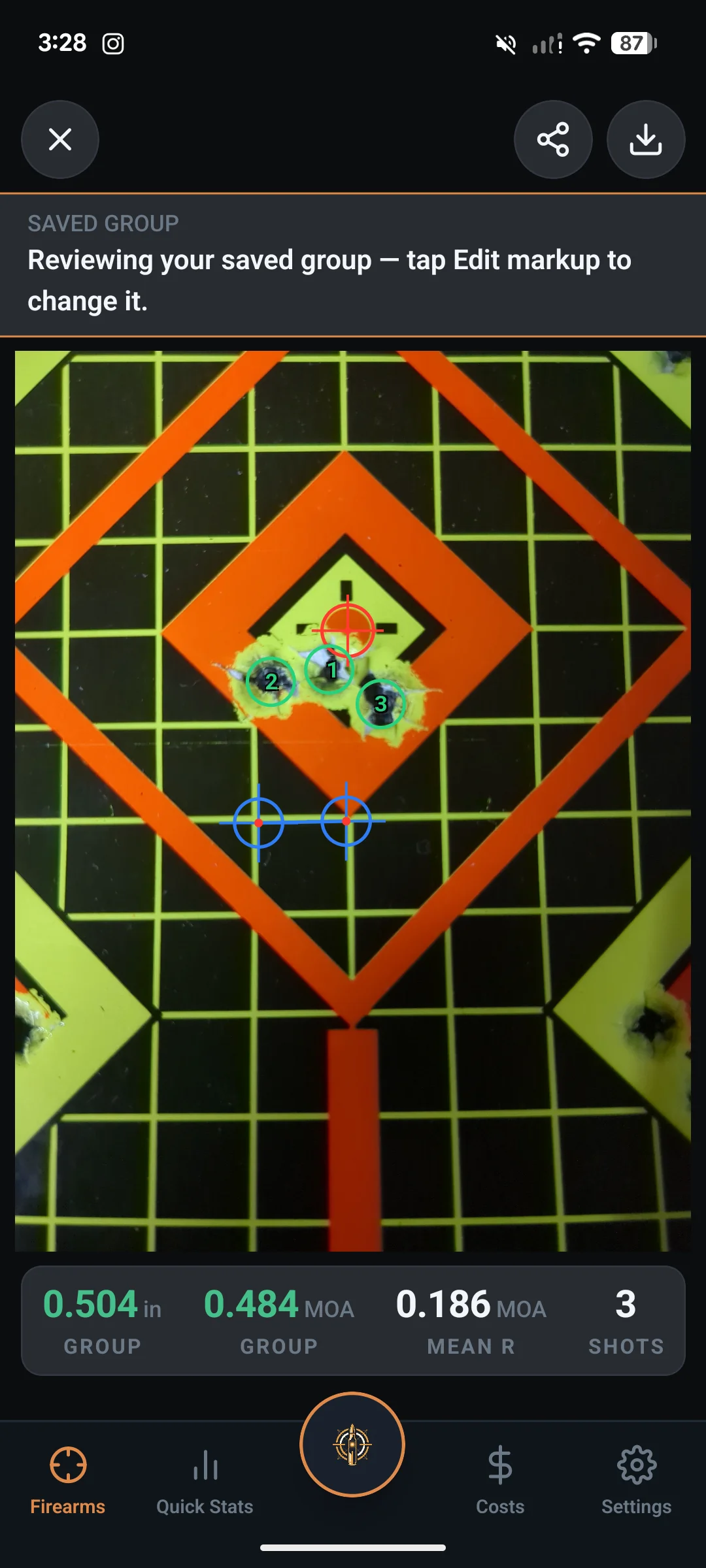
So we built it. LoadNode keeps every firearm, recipe and charge ladder in one place, and with Pro every measured group alongside them. It computes standard deviation and extreme spread the chronograph-correct way. It measures your groups from a photo: real MOA, mean radius, point-of-impact offset. It compares your charges honestly, showing what your own data can and cannot separate: when your sample cannot resolve a difference between two charges it says exactly that, rather than calling them the same, and where the arithmetic supports a number it estimates how many shots at each charge it would take to settle the question. It never names a winner and never picks a charge. And it does all of that offline, because cell service at the range is a luxury, not a guarantee (with one beta-only exception, below).
The handloading app we wished existed
We didn’t set out to build a handloading app to sell: we set out to solve our own problem. The first version was just a charge-ladder tracker that did the SD and ES math correctly. Then came group measurement from a photo, because eyeballing calipers on a paper target is no way to chase tenths of an MOA. Then came the Pro side: charge comparison with its confidence intervals, saving a measured group and linking it to the load that made it, chronograph sync, cost and ROI tracking, multi-barrel records, and an AI that reads the numbers behind a group, its geometry and your velocities, and describes what they suggest: it never sees your photo, and it never names a charge. Every feature came from a real gap on a real bench, not a feature-list meeting.
What ties it together is the part most handloaders never get: every number links back to the exact load that produced it. Your charge weight, that string’s 9.1 fps SD, the 0.59-MOA group it printed, the temperature and density altitude you shot it in: one connected record, not five disconnected ones you cross-reference by hand. That correlation is the whole point: it turns a pile of numbers into something you can actually learn from.
We are shooters building for shooters, and we develop our own loads the same way we would tell anyone to: from SAAMI-compliant, current published data, starting low and working up carefully. LoadNode is a logbook and an analysis tool: it helps you understand your own results, but it never hands you a charge weight, and it never will. That line isn’t a limitation; it is a promise.
And because the range rarely has cell service, the bench side of LoadNode works with no connection at all: your phone never needs a signal to run the numbers, measure a group, or save your data. The only things that leave your phone are the ones you ask for: an AI analysis, optional cloud sync, and the optional weather autofill, which sends your position rounded to about a kilometre to our weather provider, never your exact firing point. Beyond that the app reaches the internet for things like crash reports, purchase validation, app updates, the emailed sign-in code and the Cloudflare Turnstile bot check that goes with it, and, on a beta build, the access check the beta keeps repeating while it is open. None of those carry your reloading data. See our Privacy Policy for the full list. The cloud is there if you want it, never required. One beta-only exception: the pre-release beta re-checks your access with the server while it is open, so it needs a connection throughout. The released app will not.
What we believe
Shooters first
Every feature has to earn its place on the bench. If it doesn’t help you make better rounds, it doesn’t ship.
One place, not five
The whole workflow under one roof: no more stitching together apps, spreadsheets, and notebooks.
Honest by design
No ads, no analytics profile, no cross-app tracking, and we never sell your data. Your loads are yours, and they stay on your device unless you choose otherwise.
A logbook, never load data
LoadNode helps you understand what your data shows: it never tells you what to load. Always develop loads from current published data, start low, and work up safely. LoadNode never publishes load data and never tells you what to load.
Come see what your own data says.
Free for two firearms of any type, and made by people who care about accuracy as much as you do. Charge comparison, saving a measured group, chronograph sync and the rest of the Pro list are a separate one-time purchase, never a subscription. See Free vs Pro.
Download on the App Store Get it on Google PlayOne beta-only exception: the pre-release beta signs you in by email and re-checks your access with the server while it is open, so it needs a connection throughout. The released app will not.