Of every variable in precision rifle work, wind is the one that never sits still: and learning how to read wind for long range shooting is what separates a first-round hit from a spotter calling “miss, left.” Elevation you can solve on a laptop; wind you have to solve in the moment. This guide covers the clock method, full- and half-value winds, how to estimate speed from mirage and flags, and the simple formula that turns a wind you can feel into a hold you can dial.
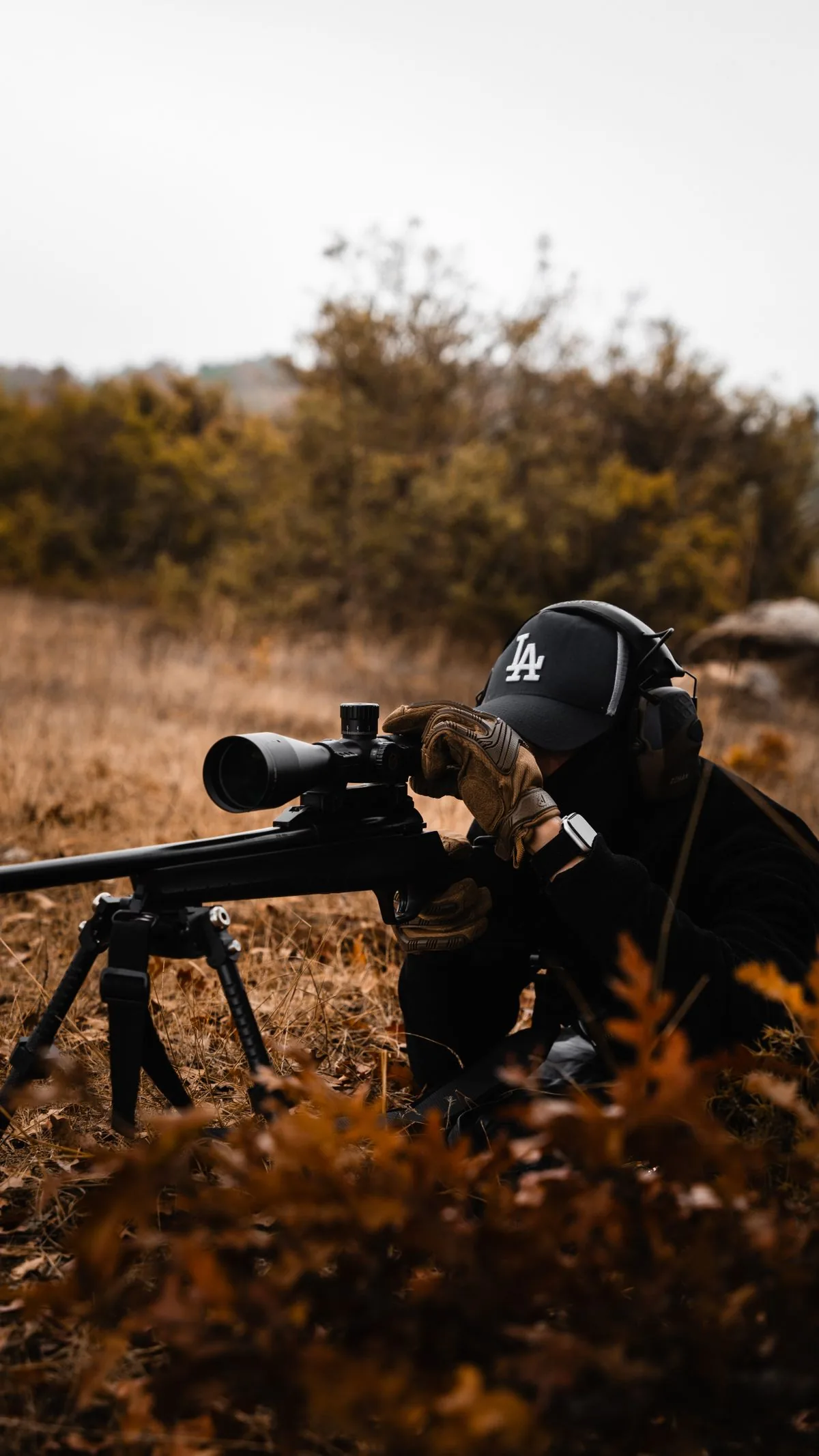
Why you have to read wind for long range shooting
Wind deflection is not linear with distance: it grows faster than range does, because the bullet keeps slowing down and spends ever more time in the crosswind. A 10 mph full-value crosswind might push a .308 roughly 10 inches at 500 yards, but the same wind can move it well over 30 inches by 600 yards. That accelerating penalty is exactly why you must read wind for long range shooting rather than hold center and hope.
The clock method: direction and value
Picture the target at 12 o’clock and yourself at 6. A wind from 3 or 9 o’clock blows straight across your line of fire: a full-value wind with maximum deflection. A wind from 12 or 6 o’clock (a head- or tailwind) is a no-value wind that barely moves the bullet sideways. Everything in between is partial:
- Wind at 1:30, 4:30, 7:30 or 10:30 (45°) ≈ 75% value (technically 70.7%).
- Wind at 1, 2, 4, 5, 7, 8, 10, 11 o’clock (30°) ≈ 50% value.
So a 10 mph wind quartering in at 45° behaves like a 7–7.5 mph full-value wind. Getting the value right matters as much as getting the speed right when you read wind for long range shooting.
Estimating wind speed: flags, mirage and feel
You will rarely get a number handed to you, so build several reads and average them:
- Mirage: the heat shimmer seen through your scope is the single best tool because it reads the air between you and the target. Boiling straight up means no crosswind; a slow wave is roughly 1–3 mph; a faster horizontal run is about 4–5 mph; and a flat, hard-slanting run signals a strong wind, often past 10 mph.
- Flags, grass and dust: a flag standing at 45° is roughly 5 mph; straight out is 12–15 mph. Watch multiple indicators at different distances, not just the one at your muzzle.
- Feel: wind you can just feel on your face is about 3–5 mph; wind that moves small branches is closer to 10.
Wind nearest the muzzle has the longest lever arm on the bullet, so weight your reads toward the first two-thirds of the range, not the target.
The wind formula that turns a read into a hold
The classic field shortcut for minutes of deflection is:
MOA of wind = (range in hundreds of yards × full-value wind in mph) ÷ C
where C is a constant for your cartridge and velocity: commonly around 15 for fast, high-BC match loads at mid ranges and lower (nearer 10) for slower rounds. A 6 mph full-value wind at 600 yards with a constant of 12 gives (6 × 6) ÷ 12 = 3 MOA. The right long-term answer is a verified ballistic solver, but the formula keeps you in the game when the wind switches on the clock. For MRAD shooters, solve in mils the same way with your reticle’s subtensions. Learn more in our reloading and shooting resources.
Log every wind call: that is how you actually improve
The fastest way to get better at reading wind is to record what you called, what you held, and where the shot actually landed. Over a season those notes reveal your personal bias, most shooters chronically under-call wind, and let you build a mental library of conditions. LoadNode ties every group you measure and every velocity string to the exact conditions and load behind it, including the wind speed and direction you logged for the session, so the conditions stay attached to the numbers instead of fading from memory. Pair that with a solid DOPE card and your holds stop being guesses.
Nobody masters wind in a day. But with the clock method for value, mirage and flags for speed, and the formula to convert it, you now have a repeatable process to read wind for long range shooting instead of flinching at the flags.
Handloading is an adult activity done at your own risk. LoadNode is a logbook and analysis tool: it never provides load data. Always develop loads from current published manufacturer data and work up safely.