Past a certain distance, marksmanship becomes as much a physics and data problem as a trigger-pull problem. That is the world of extreme long range shooting, ELR, where shooters send bullets a mile and beyond, flight times stretch past several seconds, and the smallest error in data becomes yards of miss. This primer explains what extreme long range shooting is, the flagship King of 2 Miles match, the cartridges that make it possible, and why nothing matters more than verified data out there.
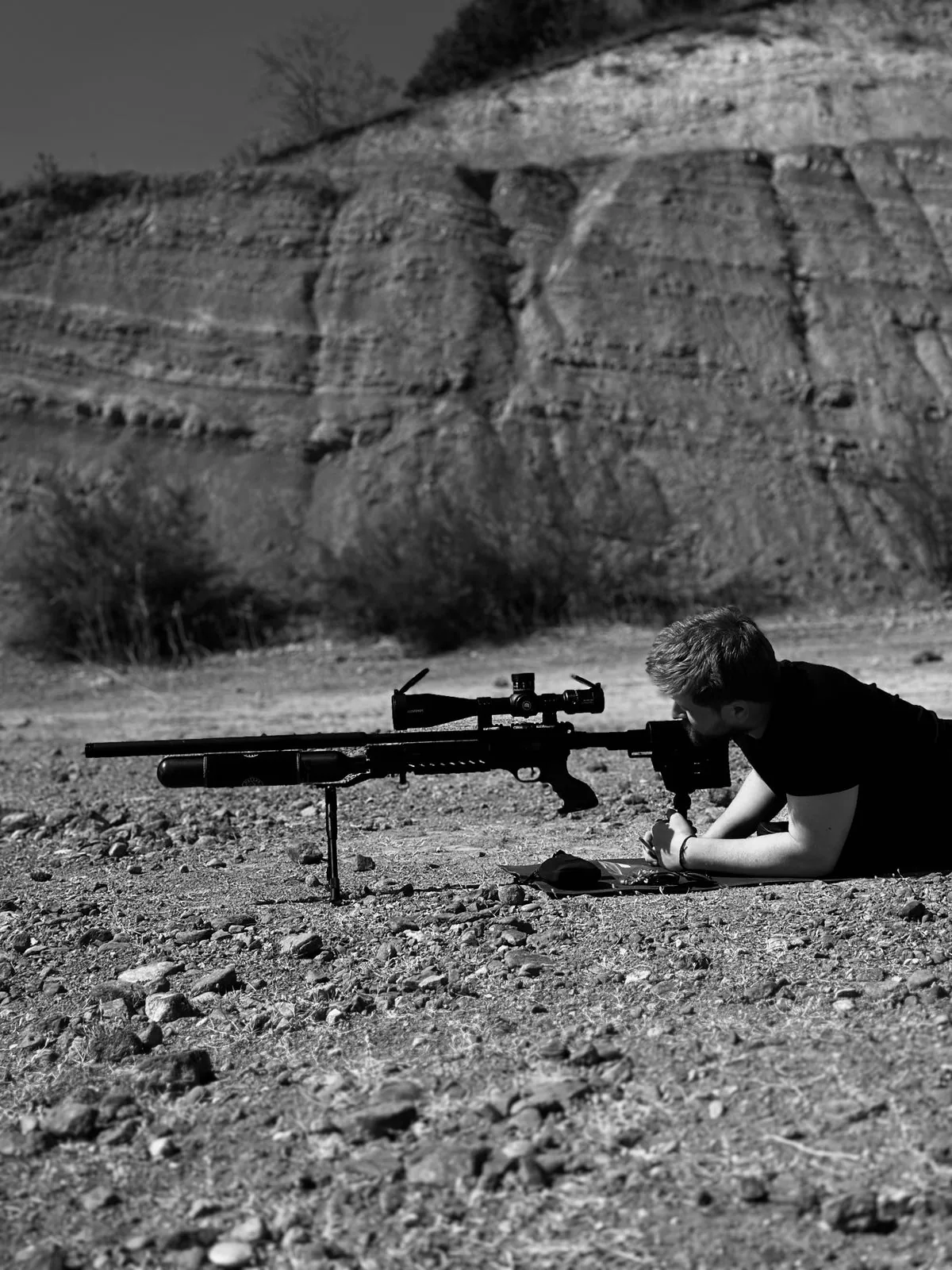
What counts as extreme long range shooting?
There is no single line, but the sport generally calls anything beyond about 1,500 yards extreme long range shooting, running out to two miles and more. For reference, two miles is 3,520 yards. At those distances a bullet may be in the air for five to seven seconds, drop hundreds of feet, and pass through the transonic zone where stability gets tricky. Everything that is a rounding error at 600 yards, spin drift, Coriolis, a 10 fps velocity change, becomes a first-round hit or a clean miss.
Three problems define the discipline. Time of flight means the target, the wind and even the light can change before the bullet arrives. The transonic transition, as the bullet slows from supersonic to subsonic, can induce instability and open up dispersion unless the projectile is very stable. And wind is layered: over 2,000 yards the bullet may cross several different wind zones at once, each pulling it a different way. Solving those is what makes ELR a team sport rather than a one-person trigger pull.
The King of 2 Miles
The premier event in extreme long range shooting is the King of 2 Miles (Ko2M), held at the NRA Whittington Center in Raton, New Mexico, and running since 2015. Qualifying targets sit from roughly 1,550 to 2,700 yards, with finals pushing toward the full two miles. Tellingly, it is a team sport: each competitor runs with a shooter, a dedicated wind coach and a ballistician-spotter, because no one person can track all the variables in real time. That team structure tells you everything about how much data drives ELR.
The cartridges of extreme long range shooting
To carry energy and buck the wind past a mile, ELR leans on big, high-BC magnums. The dominant chamberings are the .375 CheyTac and .416-class cartridges (such as the .416 Barrett and various wildcats), firing long, heavy, ultra-high-BC bullets. Lighter ELR and the transition from tactical shooting often use the .338 Lapua Magnum. These cartridges retain supersonic velocity and resist wind far downrange: the whole point of ELR is keeping the bullet predictable where lesser rounds have gone subsonic and unstable.
Why data beats guessing past a mile
At ELR distances you cannot “Kentucky windage” your way to a hit. A serious extreme long range shooting attempt depends on a trued ballistic solver fed with real inputs: a chronographed muzzle velocity, a measured (not advertised) ballistic coefficient, live atmospherics, latitude and firing azimuth for spin drift and Coriolis, and confirmed drops from actual fired data. The bullet does exactly what physics says: your job is to feed the model honest numbers.
That is why a disciplined logbook matters even for the mile-plus crowd. LoadNode keeps your true velocities, standard deviations and group data tied to the exact load and barrel that produced them, so the numbers you feed your solver are your own verified data. Whether you ever shoot a formal ELR match or just stretch your rifle to its limit, the lesson of extreme long range shooting is the same: measure everything, and trust data over hope. Build your holds with a good DOPE card and validate them on steel.
Handloading is an adult activity done at your own risk. LoadNode is a logbook and analysis tool: it never provides load data. Always develop loads from current published manufacturer data and work up safely.